
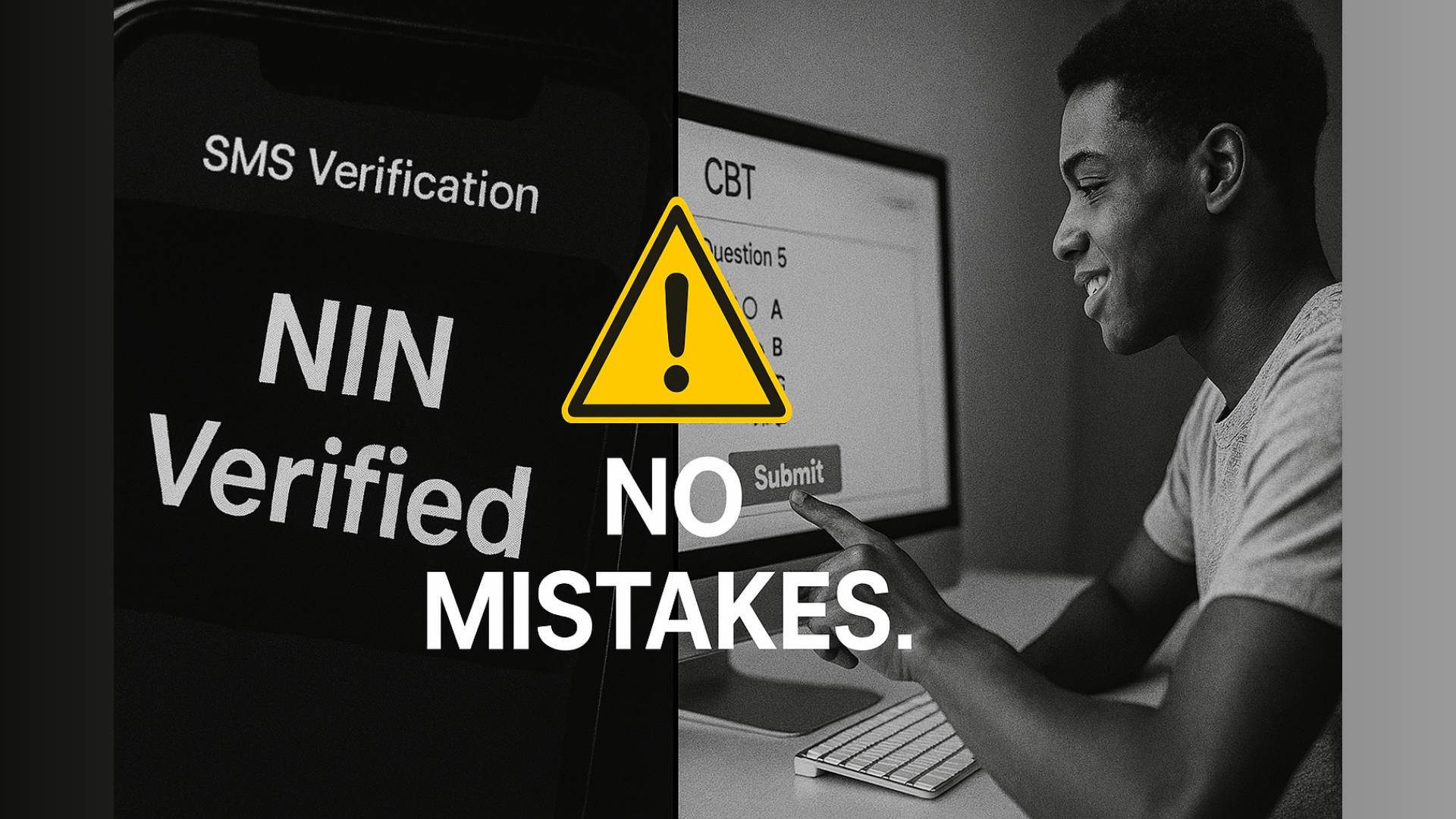
2026 University Exam Guide: New Rules for JAMB, SAT & Digital Tests
The release of the JAMB 2026 UTME guidelines in Nigeria this week signals a massive shift that is not limited to West Africa. Whether you are a student in Lagos verifying your NIN (National Identification Number) or a student in New York preparing for the adaptive Digital SAT, the rules of university engagement have changed.
Paper exams are dying. Biometric security is tightening. The 2026 academic cycle is the most "digital-first" in history, and missing a single administrative step can disqualify you before you even enter the exam hall.
This guide covers the critical updates for the JAMB 2026 cycle and connects them to the broader global trend of digital standardized testing.
How Do I Secure Admission in 2026?
To pass 2026 entrance exams like JAMB or the Digital SAT, you must prioritize data accuracy and digital familiarity. Ensure your biometric ID (NIN/Passport) matches your application exactly, as corrections are now restricted. Master the "Computer Based Test" (CBT) format by practicing with on-screen timers and digital calculators rather than paper notes.
1. The "Identity Gatekeeper": Accuracy is Everything
In 2026, your exam score matters less than your identity verification.
For JAMB 2026 candidates, the Board has made it clear: Your NIN is your identity. The biggest hurdle reported in the 2026 guidelines is "data mismatch." If the name on your NIN does not match your school documents exactly, you cannot generate a profile code.
- The Rule: You must send your NIN to 55019 or 66019 to initiate registration.
- The Trap: Once your profile is created, it cannot be changed. If you realize later that your Date of Birth is wrong, JAMB cannot fix it. You must go to the National Identity Management Commission (NIMC).
Globally, this mirrors the security protocols of the Digital SAT and ACT. The College Board now uses rigid digital check-ins where facial recognition or biometric ID checks are becoming standard to prevent impersonation.
Pro Tip: Do not wait until registration opens on January 31, 2026, to check your ID. Verify your NIN or Passport details today. If there is a typo in your name, fix it with the issuing authority immediately.
2. The Shift to Digital: Adaptive vs. Linear Testing
The era of shading paper OMR sheets is ending.
- Nigeria (JAMB/WAEC): The 2026 UTME is 100% Computer Based (CBT). Furthermore, WAEC (West African Examinations Council) is intensifying its transition to digital exams for senior school candidates. The challenge here is digital stamina—reading long passages on a screen without losing focus.
- Global (SAT/Cambridge): The Digital SAT is now fully "adaptive." This means if you do well on the first module, the second module becomes harder (and worth more points). Conversely, Cambridge International is rolling out digital exams for subjects like Biology and Accounting in June 2026.
Pro Tip: For adaptive tests like the SAT, do not panic if the questions suddenly get harder—that is a good sign! It means you aced the first section. For JAMB, speed is key; practice skipping difficult questions and returning to them later.
3. Mandatory "Status Declaration" (The New Loophole Closer)
A major update in the JAMB 2026 guidelines is the Mandatory Admission Status Declaration.
To curb exam malpractice, candidates must now declare if they are already students in a tertiary institution. Many students sit the exam multiple times to "upgrade" their course or university. In 2026, hiding your current student status can lead to automatic disqualification.
This aligns with global trends where universities share data to prevent "seat hoarding" (holding acceptances at multiple colleges). Transparency is no longer optional; it is mandatory.
Pro Tip: If you are currently enrolled in a university and want to change courses, use the Transfer Window rather than secretly retaking the entrance exam. It is safer, cheaper, and legitimate.
Frequently Asked Questions (FAQ)
1. When does JAMB 2026 registration start? Registration runs from Friday, January 31, 2026, to Saturday, March 8, 2026. Do not miss this window, as extensions are rare.
2. Can I use a different phone number for my profile code? No. The phone number you use to send your NIN to 55019 becomes permanently tied to your profile. If you lose that SIM card, you risk losing access to your admission portal.
3. Is the Digital SAT harder than the paper version? Most students find it less stressful because it is shorter (2 hours vs. 3 hours) and reading passages are more concise. However, the adaptive math section can be challenging if you are not prepared for the difficulty jump.
4. How do I fix a mistake in my JAMB name or Date of Birth? JAMB will not fix this for you. You must visit a NIMC (National Identity Management Commission) office to update your NIN data. Once NIMC updates it, it will reflect on your JAMB profile—but this takes time, so do it now.
5. Are calculators allowed in the 2026 CBT exams? Physical calculators are generally banned. You must use the on-screen calculator provided in the exam software. Practice using your computer's calculator app to get used to the interface.
Conclusion
The 2026 exam cycle is not just about what you know; it is about how well you can navigate the digital and administrative hurdles. Whether you are aiming for the University of Lagos or Harvard, the path is the same: Verify your ID early, master the digital tools, and register on time.
Are you preparing for an entrance exam in 2026? Drop a comment below with your target score and let’s discuss the best study apps to get you there.