Anonymous Messaging: What It Actually Protects You From (And What It Doesn't)
An honest guide to anonymous messaging apps — the difference between private and anonymous, an honest comparison of Signal, Session, Briar, Element, and Telegram, what no app can protect you from, and a practical setup for genuine anonymity.
Every major messaging app promises privacy. Most deliver something more limited — not through outright dishonesty, but through the gap between what most users assume and what the fine print, metadata trails, and legal compliance notices actually reveal. End-to-end encryption — the feature most apps advertise most prominently — protects message contents from being read in transit. It does not make you anonymous. It does not prevent metadata collection. It does not protect against a compromised device, a cooperative recipient, or a legal order compelling disclosure of records the app provider holds.
Anonymous messaging exists on a spectrum. At one end, apps that simply do not require a phone number for registration. At the other, tools with end-to-end encryption, onion routing, decentralised architecture, and zero-knowledge design where the service provider literally cannot produce your records even if compelled by a court. Where you need to sit on that spectrum depends entirely on who you are protecting your communications from and what the consequences of exposure would be.
This guide explains what anonymous messaging apps actually protect, which tools deliver on their architectural promises, and — critically — where every tool has limits that most coverage does not address.
Disclaimer: This article is for informational purposes only and does not constitute legal or security advice. Laws governing communications privacy vary significantly by country. If you are in a high-risk situation requiring communications security, consult a qualified digital security professional.

Why Anonymity Is a Legitimate Need, Not a Red Flag
Anonymous communication is not primarily the tool of people with things to hide. It is the infrastructure through which journalists protect sources, domestic abuse survivors contact support services without leaving a device trail, whistleblowers communicate with news organisations, activists in authoritarian countries organise without putting their names on records, and ordinary people ask sensitive medical, legal, or personal questions without fear of that information being sold, subpoenaed, or accessed by someone with authority over their life.
Research by the Electronic Frontier Foundation and others has documented a consistent 'chilling effect' from surveillance and data exposure risk: people self-censor legitimate communications — medical questions, political views, legal queries, personal disclosures — specifically because they are unsure who can access their messages [SOURCE: verify — EFF or similar digital rights research on self-censorship]. This is a concrete harm with concrete consequences for individual health, legal rights, and political participation.
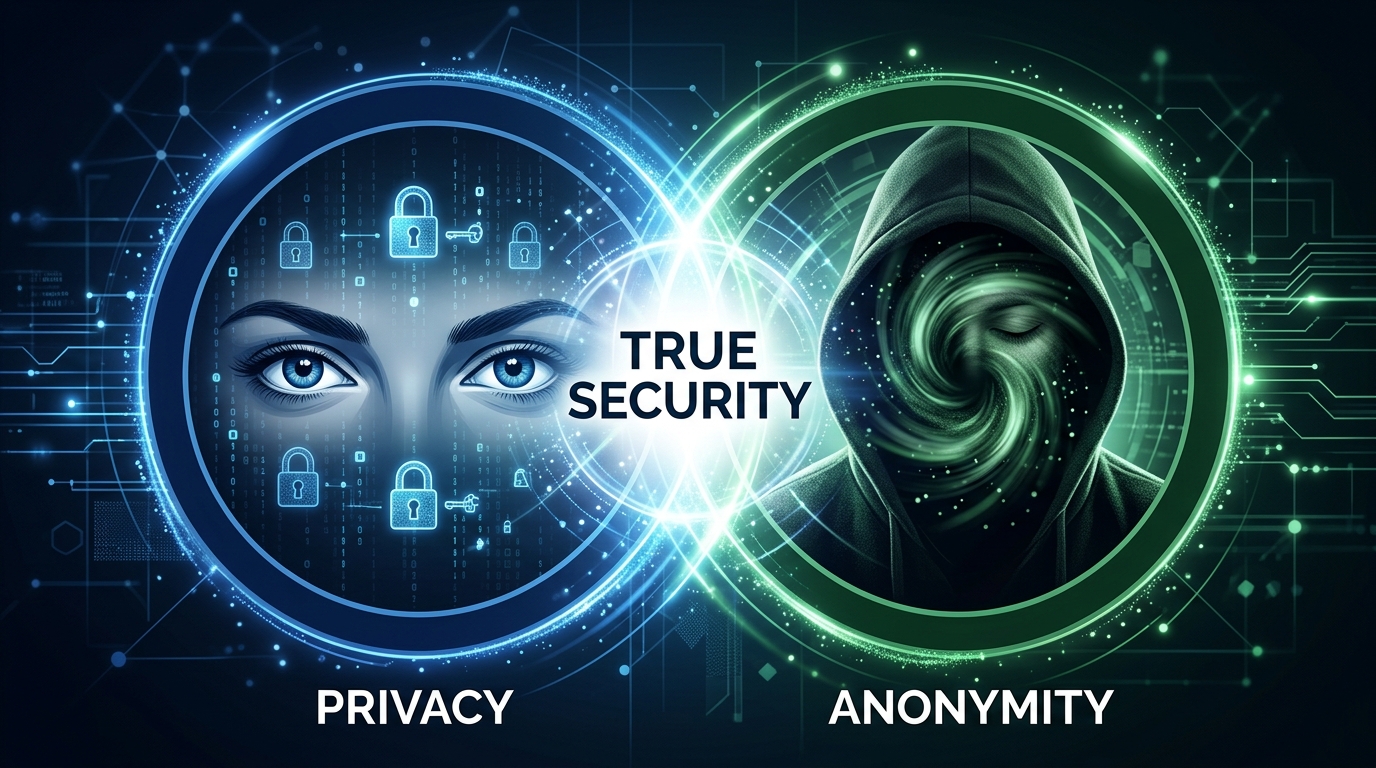
The distinction most people conflate: 'private' and 'anonymous' are not the same thing and are not provided by the same technical mechanisms. A message can be private — encrypted end-to-end so that no one can read its contents — while still being completely traceable: tied to your phone number, your device fingerprint, your IP address, and a metadata record of who sent it, when, from where, and to whom. True anonymity requires that neither the content nor the sender's identity be accessible. Most apps provide one. Very few provide both.
The Threat Model Question: Who Are You Protecting Against?
Before choosing an app, the correct first question is not 'which app is most secure?' but 'who am I protecting my communications from?' The answer determines the technical requirements entirely.
Your employer or school network: Can see network traffic on their infrastructure but typically cannot read end-to-end encrypted message contents. Standard encrypted messaging (iMessage, WhatsApp, Signal) is sufficient for this threat level. They know you sent a message; they cannot read it.
A controlling partner or family member with physical access to your device: Encryption is secondary to visibility. You need an app that does not sync to shared cloud accounts, leaves no notification previews on the lock screen, and ideally does not appear in the main app list. You also need to audit your device for monitoring software before any communications security matters.
Data brokers and advertising networks: You need an app that does not collect behavioural metadata — read receipts, typing indicators, contact list uploads, usage patterns. Most mainstream apps collect this. Signal and Session do not.
Law enforcement or government agencies: This is where the legal jurisdiction of the app provider's servers and the architecture of the app matter most. Apps hosted in countries with data-sharing agreements with your government, or that hold user records in any form, may be legally compelled to produce those records. Apps with genuine zero-knowledge architecture — where they technically cannot access your data — are more resistant, but you must verify the architecture through independent audit, not marketing claims.
Corporate intelligence or sophisticated hackers: End-to-end encryption covers message contents. But metadata — who you message, how often, at what times, from which locations — can be as revealing as content in the hands of a sophisticated analyst. Only apps that route through Tor or decentralised networks meaningfully address this.

The Main Anonymous Messaging Apps — An Honest Assessment
Signal — Gold Standard for Security, Imperfect on Anonymity
Signal is the most credible mainstream option for secure messaging, recommended by the Committee to Protect Journalists, the Electronic Frontier Foundation, and most professional digital security guides for journalists and activists. Its protocol — the Signal Protocol — has been independently audited multiple times and is the basis for the encryption in WhatsApp and iMessage. The Signal Foundation is a non-profit with no advertising revenue model, removing the primary commercial incentive to monetise user data.
The honest limitation: Signal requires a phone number to register. If that number is tied to your real identity — as most phone numbers in most countries now are, thanks to SIM registration requirements — you are private rather than anonymous. The person you are communicating with may not know your identity if you use a separate number, but Signal itself has your registration number, and a legal order can in theory link a Signal account to a phone number. Signal has demonstrated resistance to producing data (they minimise what they hold), but the phone number requirement remains the architectural limitation.
For most people in most situations, Signal is the correct choice. It combines maximum message security with practical usability and mainstream user adoption. The anonymity limitation matters primarily for high-risk use cases.
Best for: Secure communications where the other party knows your identity; journalists working with sources who already have a Signal number; anyone wanting the strongest practical security for everyday use.
Session — Genuine Anonymity Through Decentralisation
Session is architecturally what Signal would be if it removed the phone number requirement and decentralised its infrastructure. Built on the Lokinet network, Session assigns each user a randomly generated Session ID — a string of characters with no connection to any real-world identifier. There is no phone number, no email, no account tied to a name or device fingerprint.

Messages are routed through a decentralised network of nodes rather than a central server, meaning there is no single entity that has a complete record of who sent what to whom. This architecture makes both legal compulsion and infrastructure compromise significantly more difficult than centralised services. Session has received independent security audits and has held up reasonably well — though it is less extensively tested than Signal's longer-established protocol.
The practical tradeoffs: a smaller user base makes it less useful for everyday communication unless you introduce your contacts to it. Message delivery is slightly slower due to the routing architecture. The app is actively developed but does not have the polish of mainstream messaging applications.
Best for: Situations requiring genuine sender anonymity where you can bring your communication partners onto the same platform; whistleblower communications; activists who need to communicate without registering an identity.
Briar — For Extreme Conditions
Briar is purpose-built for situations where even internet infrastructure itself cannot be trusted — specifically designed to sync over Wi-Fi, Bluetooth, and Tor when internet and SMS service is unavailable or monitored. It is used by journalists and activists operating in countries with heavy internet censorship and surveillance infrastructure.
Briar is not a daily messaging app. The setup is technically demanding, the interface is functional rather than consumer-polished, and both parties must have Briar installed and complete a key exchange either in person or via a secure link before communication is possible. The friction is intentional — it reflects the threat environment the app is designed for.
Best for: High-risk situations, particularly in politically authoritarian environments where standard internet communications are compromised or unavailable.
Element (Matrix Protocol) — Decentralised and Self-Hostable
Element is built on the open Matrix protocol — a decentralised, federated communication standard that allows end-to-end encrypted messaging across a network of independently operated servers. Unlike Signal or Session, Matrix is a protocol rather than a single service, meaning you can choose which server hosts your account or, for maximum control, self-host your own Matrix server.
Element, the primary Matrix client, supports anonymous registration on many Matrix servers and offers end-to-end encryption for private conversations. The architecture is sound; the interface is less polished than mainstream apps. For organisations or technically capable individuals who want maximum control over their communication infrastructure, Matrix is the most flexible option in the ecosystem. The retirement of the AWS-acquired Wickr platform in 2023 demonstrated a useful lesson: relying on a single-company privacy tool creates existential risk when ownership changes. Protocol-based, self-hostable alternatives like Matrix are structurally more resilient.
Best for: Teams and organisations wanting self-hosted, auditable communication infrastructure; technically capable individuals who want to control their own server.
Telegram — The Widely Misunderstood One
Telegram is regularly described as a secure or anonymous messaging app. It is neither by default, and this misunderstanding creates real security failures for people who depend on it incorrectly.
Standard Telegram chats are stored on Telegram's servers and encrypted only between your device and Telegram's infrastructure — not end-to-end. The company has demonstrated willingness to comply with legal requests from certain governments for account data. Telegram's 'Secret Chats' feature does implement end-to-end encryption, but most users never activate it and conversations default to cloud storage.
Where Telegram has genuine utility: its group and channel pseudonymity — where you participate under a username rather than a phone number — is useful for communities wanting pseudonymous public discussion. For sensitive one-to-one communications, it is the wrong tool unless you are using Secret Chats with full awareness of the distinction.
Best for: Large group communities and public channels where pseudonymity is sufficient; NOT appropriate for sensitive private communications where end-to-end encryption and metadata privacy are required.
App Comparison at a Glance

What Anonymous Messaging Cannot Protect You From
This is the section most security coverage skips or minimises, and it matters more than the app comparison above for most practical threat scenarios.
Your compromised device. If your phone or computer has been infected with spyware, is running a monitoring profile (common in employer-managed devices and abusive relationships), or is subject to physical access by someone who can install monitoring software, messages can be read before they are encrypted on departure or after they are decrypted on arrival. The NSO Group's Pegasus spyware extracted messages from Signal-protected conversations by reading the screen buffer — the encryption of the transmission was entirely irrelevant because the compromise happened at the device level. App-level security is predicated on device-level security.
The other person in the conversation. Your communications are only as private as the person at the other end. If they screenshot, copy, share, forward, or if their device is compromised by someone who wants your communications, no encryption or anonymity architecture protects you. This is the most consistent real-world failure mode in sensitive communications — not the app, but the recipient.
Traffic analysis and metadata. Even without reading message contents, an observer with access to network traffic can learn significant information from patterns: who you communicate with, when, how frequently, how long sessions last, how large the messages are. This metadata analysis is the primary tool of sophisticated state-level surveillance precisely because it is less regulated and more revealing than content interception in many operational contexts. Apps that route through Tor or decentralised networks mitigate this; most do not address it at all.
Legal compulsion. In most countries, a court order can compel an app provider to produce any data they hold. Apps with genuine zero-knowledge architecture — where they technically cannot access user data — are more resistant, but this requires independent verification of the architecture claim rather than accepting marketing descriptions. Companies that say they 'cannot' produce data are in a structurally different position to companies that say they 'will not' — only the former is a meaningful technical claim.
Operational security failures. Most real-world communications security failures are not cryptographic — they are operational. Using a secure app to send a message that reveals your identity through its content, sending from a location that is known or trackable, or using a device registered to your real identity undermines any technical protection at the application layer.
Practical Setup for Genuine Anonymity
If you need genuine anonymity rather than improved privacy, the correct approach is layered. No single tool is sufficient:
- Separate SIM or VoIP number for any registration that requires a phone number — a number not tied to your real identity, paid for in cash or with a privacy-preserving payment method where feasible
- Separate device or device profile — a cheap Android device used exclusively for sensitive communication, never signed into accounts tied to your real identity, never connected to Wi-Fi networks that identify your location
- VPN or Tor when registering and using the app — to prevent your IP address from being logged by the service at registration and at each use
- Disappearing messages enabled — most secure apps support automatic message deletion after configurable time periods; this limits the forensic value of physical device access
- Device security audit before any other step — monitoring software or stalkerware on your primary device makes all other measures irrelevant
- Communications partner alignment — the other person must understand the same threat model and apply the same practices; security degrades to the weakest link in the chain
A note on burner apps: temporary phone number applications — designed for SMS and call anonymisation — are not the same as anonymous messaging apps. They hide your real number from the person you are contacting, but they are typically tied to your payment method, device fingerprint, or account identity. They provide a layer of separation appropriate for everyday uses like website sign-ups; they are not sufficient for communications with significant legal, safety, or political exposure.
Hypothetical example: A journalist in an authoritarian country needs to receive documents from a source inside government. She sets up a Session account on a device not tied to her real identity, connected through Tor, registered with a VoIP number paid with cash. She provides the Session ID to her source through a face-to-face meeting with no digital record. Messages sent through this channel have no metadata trail, no phone number, and no central server that can be compelled to produce records. Device security on both ends has been verified. This is the full-stack approach required for genuine high-risk anonymity — and it is significantly more involved than simply downloading a privacy-branded app.
Key Takeaways
- 'Private' (encrypted content) and 'anonymous' (untraceable sender) are different properties requiring different technical mechanisms — most apps provide one, and very few provide both
- Signal provides the strongest practical security for most users; Session provides genuine sender anonymity at the cost of a smaller user base
- Telegram is not end-to-end encrypted by default — the majority of its users are in cloud-stored chats, and this is a significant security failure for people who assume otherwise
- Your threat model — who you are protecting against — determines which app is appropriate; a single correct answer does not exist across all use cases
- Device-level compromise, recipient behaviour, and traffic analysis are the most common real-world failure modes — the app is rarely the weakest link
Frequently Asked Questions
Is WhatsApp actually private?
WhatsApp uses end-to-end encryption for message content — Meta cannot read your messages. However, WhatsApp collects and shares significant metadata with Meta: who you message, when, how frequently, your contacts list, your device identifiers, and usage patterns. This metadata is used for advertising targeting and shared across Meta's platforms. WhatsApp is reasonably private for message content; it is not anonymous and its metadata collection is extensive relative to alternatives like Signal.
Can deleted messages be recovered?
In some circumstances, yes. Deleted messages may persist in device backups (iCloud, Google Drive) or local caches depending on the app's backup behaviour and your device settings. Apps with 'disappearing messages' features that encrypt and then delete are more reliable than manual deletion, which typically removes the display record but not necessarily the underlying data. Physical device forensics tools used by law enforcement can sometimes recover cached data that the user believes has been deleted — the reliability depends on the device, the app, and the time elapsed since deletion.
Are anonymous messaging apps legal?
Yes, in virtually all democratic countries. Using a secure or anonymous messaging app is legal — the same way using a sealed envelope for postal correspondence is legal. What you communicate through any app is subject to the same laws that apply to any other communication channel. Using an encrypted or anonymous app does not create a legal shield for illegal communications content; it simply protects lawful communications from unwarranted surveillance.
What is the safest messaging app for journalists?
Signal is the standard recommendation from the Committee to Protect Journalists, Reporters Without Borders, and most major press freedom organisations for day-to-day source communication. For higher-risk document transfers, SecureDrop — a Tor-based submission system rather than a messaging app — is the standard used by major news organisations globally. Session is increasingly recommended for journalists needing genuine sender anonymity without phone number registration.
Does a VPN make my messaging anonymous?
A VPN hides your IP address from the app's servers and from your internet service provider. It does not encrypt message content (that is the messaging app's function), and it does not make you anonymous — your VPN provider typically knows your real IP address and identity and may keep connection logs. A reputable no-logs VPN adds a meaningful layer of IP address protection; it is one component of an anonymity stack, not a complete solution on its own.